
How Often to Change an AC Filter in Northern Colorado and Why the Answer Is Different Here
Greeley sits at 4,658 feet on the dry edge of Colorado’s Front Range, where wind pulls dust off surrounding feedlots and farmland straight through open windows and return vents.
That local reality is why the generic “change it every 90 days” sticker printed on most filter boxes doesn’t hold up here. If you’re asking how often to change an AC filter in a Greeley home, the honest range is every 30 to 60 days during peak cooling season, not once a quarter.
The dry air is the culprit. Humid climates let dust settle and clump before it ever reaches your equipment; Greeley’s low humidity keeps fine soil and cottonwood fluff airborne longer, so it lands directly on your filter media.
Getting the timing right on how often to change your AC filter protects airflow, energy bills, and the lifespan of your entire HVAC system.
Why Northern Colorado Breaks the National Filter Rule
Standard filter guidance is written for sea-level, humid markets, not a high-plains city surrounded by open farmland.
Greeley’s mix of altitude, low humidity, and agricultural dust means filters load up with debris noticeably faster than most manufacturer estimates assume.
- Elevation near 4,658 feet reduces air density, so your blower already works harder to push air through any filter.
- Dry summer air (often 35–45% relative humidity in July) keeps particulates suspended instead of settling on floors and furniture.
- Wind-blown dust from farmland east of Greeley and along the Platteville corridor adds a steady particulate load most national filter charts never account for.
The Real AC Filter Schedule for Greeley Homes
Filter thickness changes the math significantly, and this is one of the most misunderstood parts of changing an AC filter correctly.
Standard 1-inch filters:
- Change every 30 to 45 days during June through August.
- Change every 60 days during spring and fall.
- Check monthly regardless of the calendar if your home sits near ag land or a busy road.
Thicker media filters: The 1-inch vs. 4-inch filter change interval is one of the biggest differences homeowners overlook. A 4-inch media filter has far more surface area, so it typically lasts 6 to 12 months even in Greeley’s dusty conditions, compared to the 30- to 60-day window a standard 1-inch filter needs.
If you’re unsure which type your system uses, a quick check during your next Air Conditioning Maintenance visit will confirm it.
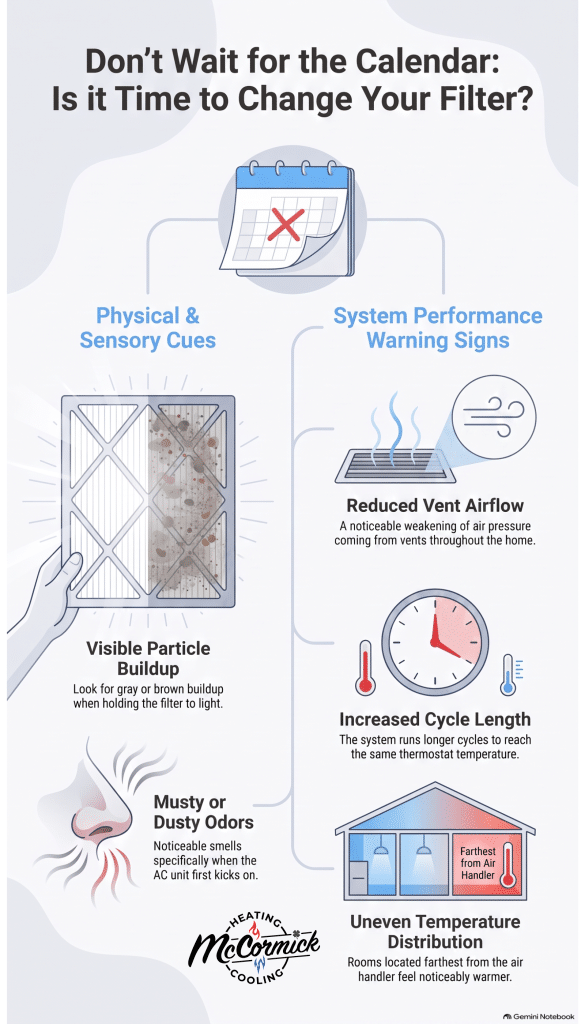
Signs Your Filter Needs Changing Before the Calendar Says So
Waiting for a reminder date isn’t always reliable. Watch for these signs a filter needs changing instead:
- Visible gray or brown buildup when you hold the filter up to light.
- Weaker airflow from vents throughout the house.
- Your system running longer cycles to hit the same set temperature.
- A musty or dusty smell when the AC first kicks on.
- Rooms farthest from the air handler feeling noticeably warmer.
The Impact of MERV Ratings and Filter Neglect
While higher-MERV filters trap smaller particles to help with allergies, they also restrict airflow more heavily. Under Greeley’s dust load, these high-efficiency filters clog faster and can work against your system if you aren’t paying attention.
Our High-Efficiency Filtration options are purposely built to balance stronger filtration with the airflow your HVAC can actually handle. No matter which filter you choose, ignoring the replacement schedule creates a domino effect.
A clogged filter forces your blower to work harder, raising energy bills, shortening compressor life, and potentially triggering a no-cool breakdown during a July heatwave or straining your furnace once heating season arrives.
Skipping tune-ups along with filter changes compounds the risk. Ask about our Preventative Maintenance Plan and let our NATE-certified techs catch airflow problems before they become breakdowns.
Filter Habits That Change the Interval Further
A few household factors shift your schedule beyond the general range:
- Do pets change the filter schedule? Yes, homes with shedding dogs or cats often need a filter change 15 to 20 days sooner than pet-free households.
- A dusty house filter schedule should lean toward the 30-day mark if anyone in the home has allergies or renovation work is happening nearby.
- How long do furnace filters last? The same filter serving your AC in summer typically continues through fall, but changing it before heating season is smart practice before your furnace runs for the first cold night.
Before your system switches from cooling to heating, review our Heating Maintenance checklist and our guide on shutting down an AC for winter to keep both sides of your system protected year-round.
For the full seasonal picture, check our pillar guide, Air Conditioner Maintenance in Greeley: What It Covers and How Often.
Key Takeaways
- Standard 1-inch filters need changing every 30 to 45 days during Greeley’s peak cooling season.
- Thicker 4-inch media filters last 6 to 12 months even with local dust levels.
- Higher MERV filters trap more particles but clog faster without proper airflow design.
- Pets, allergies, and nearby farmland all shorten the recommended interval.
- Change your filter before your furnace’s first run each fall to protect both systems.
A Small Habit With Big Protection for Your HVAC System
Filter changes feel minor compared to a full tune-up, but in Greeley’s dry, dusty, high-altitude climate, they’re often the difference between a system that lasts its full rated lifespan and one that struggles by year ten.
Building a realistic schedule around your specific filter thickness and household habits protects your comfort and your equipment far more than any generic printed reminder ever will.
Ready for a professional set of eyes on your system? Visit McCormick Heating & Cooling on Google to see local reviews, or contact us to schedule your next AC or furnace check-up today.

Frequently Asked Questions
How often should I change my AC filter?
Most Greeley homes need a 1-inch filter changed every 30 to 45 days during peak cooling season due to dust and dry air. Thicker media filters last several months longer, so checking your filter type first matters.
Does a dusty or windy climate mean changing it more often?
Yes. Wind-blown agricultural dust and Greeley’s low humidity keep particulates airborne longer, loading filters faster than in humid climates, shortening the standard 90-day interval to roughly 30 to 60 days.
What happens if I never change the filter?
A neglected filter restricts airflow, forcing your blower and compressor to overwork. This raises energy bills, risks mid-summer breakdowns, and can void manufacturer warranties requiring documented maintenance.
Does a higher MERV filter need changing more often?
Often yes. According to the Environmental Protection Agency (EPA), higher MERV ratings mean a filter is highly effective at trapping microscopic particles like fine dust and pollen. However, because the filter material is denser, it restricts airflow more.
Under Greeley’s heavy dust load, these high-efficiency filters can clog much faster unless your system is specifically sized to handle the added resistance.
Should I change the filter before the furnace runs for the first time?
Yes. A fresh filter before your furnace’s first fall run protects airflow and safety components, since restricted air movement strains both heating and cooling sides of a shared HVAC system.