Furnace Smells Like Burning? Here’s What’s Normal and What’s Not in Greeley
When your furnace smells like burning on the first cold night of October, most Greeley homeowners pause and ask the same question: Is this normal, or should I shut it off right now?
The answer depends entirely on the type of smell. Some burning odors are harmless and clear within a few hours. Others are early signs of a fault that will not fix itself.
Greeley sits at nearly 4,700 feet on the Front Range, where long, dry summers leave furnaces idle for months at a time. That off-season buildup is behind most first-startup smells homeowners notice each fall.
This guide breaks down every reason your furnace smells like burning, explains what is causing it, and tells you clearly which ones require a call for professional heating services.
The Normal First-Startup Smell in Greeley
The most common burning smell from furnace systems at the start of the season is dust burn-off, and it is completely normal.
Over spring and summer, fine dust, pet dander, and debris from Greeley’s dry summer months settle on the heat exchanger, burner assembly, and ductwork. The first time the furnace runs in fall, that layer burns off and briefly circulates through the home.
Because Weld County sees high plains winds and seasonal agricultural dust, more fine particulate tends to settle inside return ducts and furnace cabinets here than in more humid, lower-elevation markets, making this fall odor especially common across Northern Colorado homes.
What a normal first-startup smell looks like:
- A faint, warm, dusty odor that fades within one to two heating cycles.
- No smoke and no visible debris coming from vents.
- Your CO detector stays silent throughout.
- The smell does not return on the second or third run.
If the odor disappears within the first few hours, no action is needed. If it lingers past the first full day or returns every time the heat cycles on, the heat exchanger and burner surfaces still have buildup that needs to come off.
A scheduled Furnace Tune-Up & Heating Maintenance cleans the burners, heat exchanger, and blower assembly before that buildup cycles back into your air all winter.
Three Furnace Smells That Signal a Problem in Your Northern Colorado Home
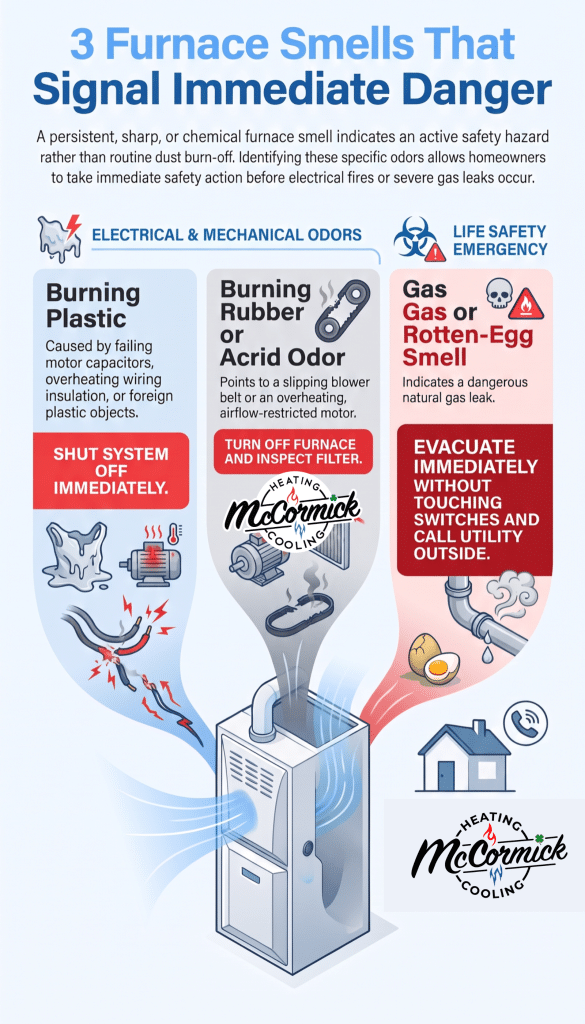
A furnace burning smell that does not clear within one to two cycles, or one that is sharp, plastic, or chemical in character, belongs in a different category entirely. These smells call for action, not patience.
1. Burning Plastic
If your furnace smells like burning plastic, shut the system off before the next run cycle.
Common causes include:
- A failing capacitor in the blower motor.
- Wiring insulation overheating near the motor or control board.
- A plastic object, such as packaging or a toy, that has fallen into a floor register or near the unit.
A plastic odor from a motor or electrical component does not improve with run time. It worsens with each cycle and can develop into an electrical fire risk. Furnace Repair is the right call at this point, not a wait-and-see approach.
2. Burning Rubber or Electrical Odor
This odor usually points to a worn blower belt slipping under load or a motor running hotter than intended because of restricted airflow.
It is sharper and more acrid than normal dust burn-off, and it tends to intensify the longer the system runs.
What to do right away:
- Shut the system off immediately
- Pull the air filter and check for collapse or heavy loading
- Call a technician before the furnace is run again
Running an overloaded motor to the point of failure converts a standard repair into a full component replacement.
3. Gas Smell
If your furnace smells like burning and also carries a rotten-egg or sulfur odor, the situation changes entirely.
That sulfur smell is mercaptan, the compound intentionally added to natural gas so leaks are detectable before they concentrate to dangerous levels.
If your furnace smells like gas, treat it as an emergency, not a service call to schedule in the morning.
Steps to follow immediately:
- Do not touch any light switches or electrical controls
- Do not attempt to restart the furnace
- Get everyone out of the house right away
- Call your gas utility from outside the home or from a neighbor’s address
- Contact McCormick after the utility has cleared the property
Once your home is cleared, our certified technicians inspect the gas valve, supply line connections, and full combustion system before the furnace operates again.
For full protection while your furnace runs this season, Proper Carbon Monoxide Detector Placement covers exactly where detectors need to be positioned in a Greeley home.
Not sure which category your furnace smell falls into? McCormick Heating & Cooling’s NATE- and EPA-certified technicians diagnose the source on site and give you a straight answer before anything is replaced. Get in touch with McCormick Heating & Cooling to book your diagnostic visit.
Can a Dirty Filter Cause a Burning Smell in Your Greeley Home?
Yes, and it is one of the most commonly overlooked causes when a furnace smells like it is overheating, but nothing looks visibly wrong.
When a collapsed or heavily loaded air filter cuts off airflow, the blower motor works harder than it was designed to, runs hotter, and produces a warm, acrid odor that many homeowners mistake for an electrical failure.
Signs a clogged filter is behind the smell:
- The odor appears on every run cycle, not just at first startup.
- The furnace short cycles or shuts off before reaching the set temperature.
- The filter looks gray, dense, or compressed when pulled out.
- Rooms take noticeably longer to warm up compared to last season.
Replace the filter first. If the motor has already been running hot for weeks or months, a technician should confirm that no lasting damage was done to the blower assembly before the full heating season gets underway.
For a broader look at what Greeley winters do to heating systems, Furnace Problems in Greeley Winters: Symptoms, Causes and When to Call covers the full range of cold-weather faults our team sees each season across Northern Colorado.
Key Takeaways
- A dusty burning odor at first startup is normal and clears within one to two cycles, caused by off-season buildup on the heat exchanger and burner assembly during Greeley’s long, dry summers.
- Burning plastic or electrical odors are not normal; shut the system off and call a technician before the next run cycle.
- A gas smell is an emergency; evacuate the home, call your gas utility from outside, then contact McCormick once the property is cleared.
- A dirty, collapsed air filter forces the blower motor to overheat and can produce a persistent burning odor on every cycle; replace it before calling for service.
- Greeley furnaces sit through a long, dry Front Range off-season and accumulate more buildup than lower-elevation systems, making annual maintenance especially important here.
Your Furnace Is Sending a Signal. Read It Before January Arrives in Greeley.
A burning odor at the start of the season is almost always an early warning. Dust burn-off is routine and temporary.
Plastic, electrical, or gas odors are early warning signs that give you a chance to fix a small problem before it becomes a no-heat call in the middle of a Greeley January night.
If your furnace smells like burning and the odor isn’t clearing on its own, don’t wait another week. McCormick Heating & Cooling’s NATE- and EPA-certified technicians find the source, show you the problem, and clearly explain your repair options. The earlier the call, the smaller the fix tends to be.
Ready to find out what your furnace is trying to tell you before the first hard cold arrives?
Contact McCormick Heating & Cooling, or visit our Google Business Profile to schedule your pre-season inspection or diagnostic visit.

Frequently Asked Questions
How can I speed up the normal dust burn-off smell when turning on my heat?
Once you confirm the odor is normal dust burn-off and not an electrical or gas issue, crack a few windows on the main floor for 30 to 45 minutes to ventilate the rooms.
Switching your thermostat fan setting from “Auto” to “On” for an hour after the heating cycle finishes also helps push the remaining warm, dusty air through your furnace filter faster.
Does a burning smell from a furnace mean there is a carbon monoxide leak?
Carbon monoxide (CO) itself is completely odorless, so you cannot smell a CO leak directly. However, an overheating heat exchanger, incomplete combustion, or a blocked flue pipe can produce a hot, metallic, or aldehydic burning odor alongside carbon monoxide.
If a burning smell is accompanied by yellow burner flames (instead of crisp blue), soot around the cabinet, or a headache, shut the unit down and have it inspected immediately.
Why do I smell burning in only one room when the furnace kicks on?
When a burning odor is isolated to a single bedroom or living area rather than the whole house, the culprit is usually inside that specific supply vent rather than the furnace cabinet.
Check the floor or wall register for fallen items like plastic toys, crayons, pet hair clumps, or construction debris that may be heating up as warm air blows past.
How often should Greeley homeowners change their furnace filter to prevent motor overheating?
In Northern Colorado’s dry, dusty climate, standard 1-inch fiberglass or pleated filters should be checked monthly and replaced every 30 to 60 days during peak winter run times.
If you have pets or use thicker 4-inch media filters, aim for every 60 to 90 days so restricted airflow never stresses the blower motor.
What should I check before calling an HVAC technician for a furnace smell?
Assuming you do not smell gas or see smoke, do three quick checks before booking a diagnostic visit: inspect your air filter to ensure it hasn’t collapsed inward, check your floor registers for dropped household objects, and look through the furnace inspection window to verify the burner flames are steady and blue.
If the filter and vents are clear or the odor smells like melting plastic or rubber, turn the system off at the thermostat and call a technician.