The Ultimate Fall HVAC Maintenance Checklist for Longmont, CO Homeowners
Longmont sits at nearly 5,000 feet along the Front Range, and that elevation means the shift from warm afternoons to freezing nights happens fast every October. If you wait until your furnace clicks on with a burning smell or refuses to start, you’re already behind.
Fall HVAC maintenance in Longmont, CO, is about acting during the mild weeks before the first hard freeze, not scrambling after it arrives.
McCormick Heating & Cooling has serviced furnaces across Northern Colorado for more than 20 years, and the pattern is consistent: the systems that fail in January are almost always the ones that skipped a fall check in September or October. A little attention now saves a cold, expensive surprise later.
Your Fall Maintenance Timeline
To stay ahead of the weather, follow this simple schedule:
- Late August/Early September: Check your air filters, replace them if necessary, and clear all indoor vents of furniture, rugs, or boxes.
- Mid-September: Test your thermostat’s heat mode and schedule your professional furnace tune-up before appointment availability tightens.
- October: Prepare for the first hard freeze, ensure your whole-home humidifier is ready and outdoor HVAC prep is complete.
Why Longmont, CO Homeowners Can’t Skip Fall HVAC Maintenance
Longmont’s first hard freeze typically lands in early-to-mid October, often earlier than homeowners expect after a warm September.
Add in dry, dusty autumn winds off the foothills, and furnaces here take on debris and airflow strain before they’ve even started their heating season.
The city’s housing stock adds another layer. Older homes near downtown Longmont may still run original furnaces from the early 2000s, while newer builds in neighborhoods like Prospect Village have equipment that’s rarely been inspected since installation.
Either way, fall HVAC maintenance is the one visit that catches problems while the weather still gives you room to fix them.
Your Fall Furnace Checklist Before the First Cold Night
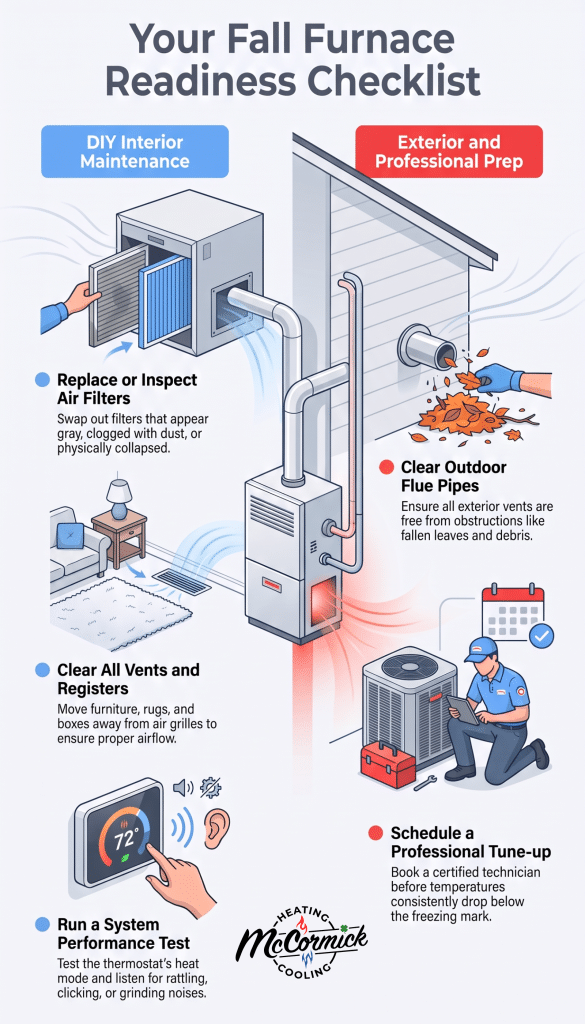
A simple fall furnace checklist helps you know exactly what to handle yourself and what to leave to a certified technician.
- Replace or inspect the air filter, especially if it looks gray, collapsed, or clogged with dust
- Clear vents, registers, and return air grilles of furniture, rugs, or boxes
- Test your thermostat’s heat mode before you actually need it
- Listen for unusual noises like rattling, clicking, or grinding on startup
- Check that outdoor vents and flue pipes are free of leaves and debris
- Schedule a professional furnace tune-up before temperatures drop consistently below freezing
Most of these take only a few minutes, but they can reveal issues that would otherwise go unnoticed until the coldest night of the year.
Understanding the HVAC Seasonal Changeover
The HVAC seasonal changeover from cooling to heating isn’t just flipping a switch on your thermostat.
Your furnace’s ignition system, gas valve, and heat exchanger have sat idle for months and need to prove they still work safely before they run for six straight months.
A furnace that short cycles, smells strongly of burning dust past the first hour, or takes longer than usual to reach your set temperature is showing signs the changeover didn’t go smoothly.
These are exactly the issues a pre-season inspection is designed to catch, and it’s why McCormick recommends scheduling fall HVAC maintenance as soon as the weather starts cooling.
Ready to get ahead of the season? Call McCormick Heating & Cooling to schedule your fall inspection before Longmont’s first freeze arrives.
First Freeze HVAC Prep: Protecting Pipes, Ducts, and Equipment
First freeze HVAC prep goes beyond the furnace itself. Cold snaps stress ductwork, exposed pipes, and outdoor equipment in ways summer weather never does.
- Insulate exposed pipes in crawl spaces, garages, or unheated areas
- Seal visible gaps around ductwork to reduce heat loss
- Cover or store any outdoor HVAC components not in use during winter
- Confirm your carbon monoxide detectors have fresh batteries before the furnace runs daily
Homes with older or leaky ductwork lose conditioned air before it even reaches the vents, which means your furnace works harder to hit the same temperature. A technician can spot these losses during a routine visit.
Furnace Startup Checklist: What Happens During a Professional Tune-Up
A professional furnace startup checklist covers roughly 20 checkpoints in about an hour, measuring what your furnace is actually doing rather than just confirming it turns on.
During a heating maintenance visit, a NATE-certified technician tests gas pressure, ignition performance, and blower motor function, then inspects the heat exchanger for cracks or corrosion.
This combustion inspection matters because it’s the only routine check that catches a developing heat-exchanger fault before it becomes a safety issue.
Every visit ends with written documentation, which many manufacturers require to keep parts warranties valid.
Autumn Heating Prep Beyond the Furnace: Air Quality and Comfort
Autumn heating prep isn’t only about the furnace running safely. It’s also about the air moving through your home once the windows stay shut for the season.
Dry Colorado air combined with a closed-up house can leave skin, sinuses, and even wood furniture worse off through winter.
McCormick’s Indoor Air Quality Services include whole-home humidifiers, air filter upgrades, and UV light installations that work alongside your furnace to keep the air you’re breathing indoors cleaner as the seasons change.
Don’t wait for the first cold snap to find out your system needs help. Reach out to McCormick Heating & Cooling today and get your home ready for a comfortable, safe winter.
Why Longmont Homeowners Choose McCormick for Fall Tune-Ups
McCormick Heating & Cooling is a family-owned company with over 20 years of experience serving Longmont and Northern Colorado, backed by 1,030+ five-star Google reviews and NATE and EPA-certified technicians.
Every fall visit includes a written service record, honest recommendations, and no pressure to replace equipment that simply needs maintenance.
Enrolling in McCormick’s Preventative Maintenance Plan bundles your spring AC tune-up and fall furnace tune-up into one simple membership, so fall HVAC maintenance never depends on remembering to call. You can also see real reviews and current ratings on our Google Business Profile.
Key Takeaways
- Longmont’s early freezes and dusty autumn winds make pre-season furnace checks essential, not optional
- A basic checklist (filters, vents, thermostat test) catches obvious issues before a technician even arrives
- Professional tune-ups test combustion, gas pressure, and the heat exchanger, things homeowners can’t safely check themselves
- Air quality upgrades and maintenance plans work together to keep your home comfortable and documented all winter
Get Ahead of Winter Before It Gets Ahead of You
The weeks before Longmont’s first hard freeze are the easiest time to fix small furnace problems and the hardest time to ignore them.
A short checklist, a professional inspection, and a plan for the season ahead are what separate a smooth winter from a string of no-heat calls in January.
Get in touch with McCormick Heating & Cooling today to schedule your fall furnace tune-up and step into winter with a system you can actually count on.

Frequently Asked Questions
When should I schedule fall HVAC maintenance?
Fall HVAC maintenance should be scheduled between August and November, before sustained cold weather arrives in Northern Colorado. Booking early means any issues found during the inspection can be repaired on your timeline with parts ordered in advance, rather than during an emergency no-heat call once temperatures have already dropped.
What should I do before turning my furnace on for the first time?
Before turning your furnace on for the first time, it is highly recommended to follow ENERGY STAR’s routine maintenance guidelines: replace or check the air filter, clear vents of any obstructions, and test your thermostat’s heat setting. A brief burning smell during the very first startup is normal, but anything that lingers or smells strong suggests buildup that a technician should inspect.
How early should I book a furnace tune-up?
You should book a furnace tune-up in late summer or early fall, ideally before October, since this is when demand rises sharply and appointment availability tightens. Scheduling early also means technicians have time to order any parts your system needs before the coldest weather sets in.
Why does my furnace smell when I first turn it on?
A furnace smells when first turned on because dust that settled on the burners and heat exchanger over the summer burns off during startup. This smell should fade within an hour; if it lingers, grows stronger, or smells like gas, it’s a sign the system needs a professional inspection rather than routine dust burn-off.