






Why Covering Your AC This Winter Might Be a Costly Mistake

If you are asking yourself, "should I cover my air conditioner in winter," the short answer for most Greeley homeowners is no. A full, sealed cover over your outdoor condenser often does far more harm than good by locking moisture against the delicate aluminum fins and creating an inviting, wind-free nest for rodents throughout the coldest months. Outdoor units are built to withstand heavy snow, freezing winds, and temperature swings without extra layers. While a top-only cap or breathable mesh wrap makes sense for properties dealing with heavy falling leaves or open wind corridors, standard units in open yards are better off completely uncovered.
Before you buy a vinyl wrap or risk expensive coil corrosion, let us help you winterize your system the right way. Give the local team at McCormick Heating & Cooling a call today to get honest advice, schedule your fall tune-up, or ensure your heating system is fully prepped for the first freeze.
Why a Sealed AC Cover Backfires in a Northern Colorado Winter
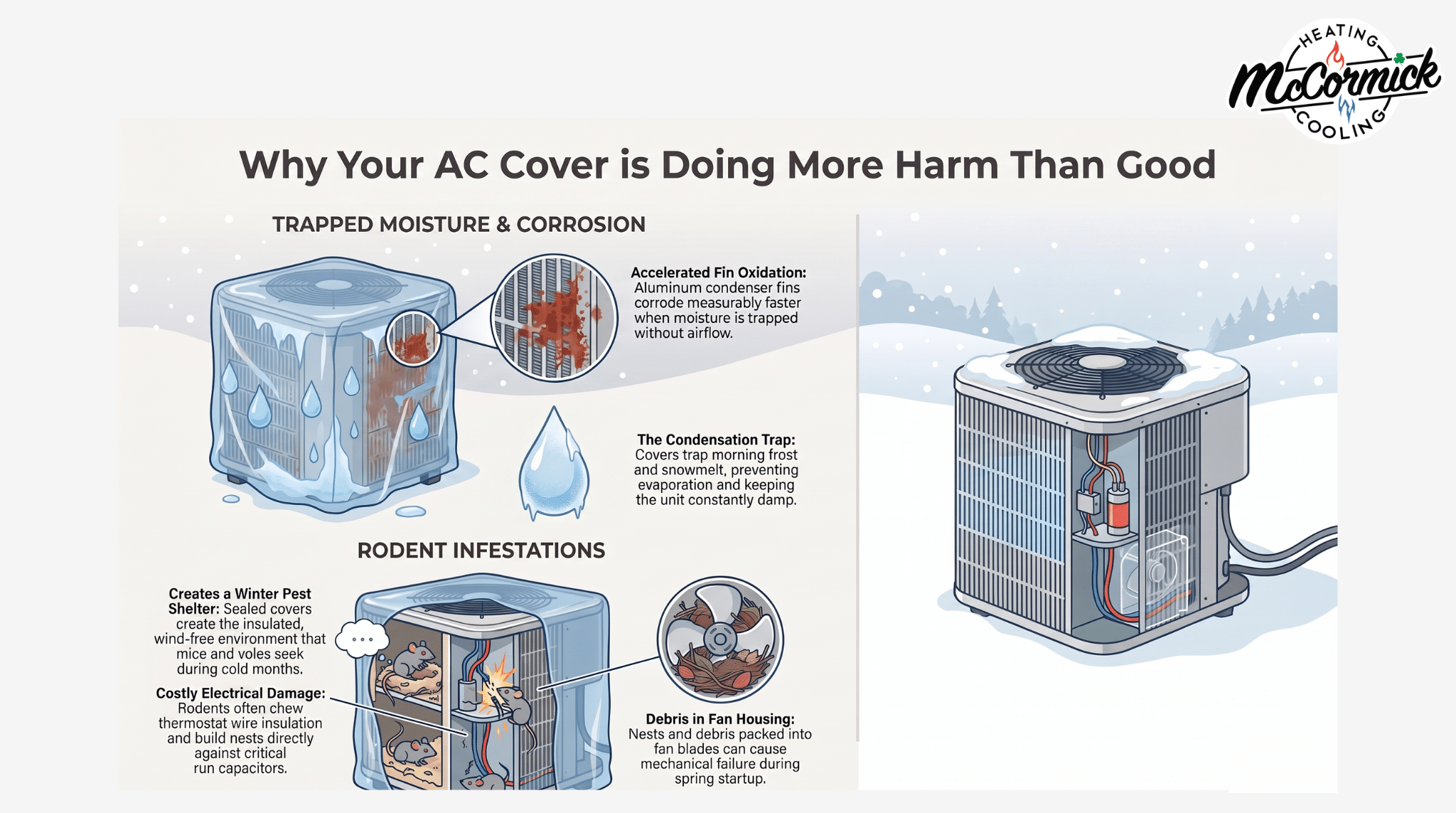
Here's the part most cover packaging leaves out. Aluminum condenser fins corrode measurably faster when moisture sits against them without airflow to dry it out. A snug vinyl cover blocks exactly that airflow. Morning frost, blowing snow, and condensation from daytime warm-up all collect inside the cover and stay there because the cover was designed to keep things out, not let moisture escape. Over one winter season, a wrapped condenser typically shows more fin oxidation by spring than an identical unit left uncovered ten feet away. This is one of the most common issues we find during spring startup calls, and it traces back to a cover nearly every time.
Rodents Treat a Covered Condenser as a Shelter
A sealed cover creates a small, insulated, wind-free cavity, which is precisely what a mouse or vole is looking for once temperatures drop. Weld County properties near open fields, irrigation ditches, or unmowed lots deal with this more than most. We had a service call last spring on a home near 71st Avenue where a covered condenser had a full mouse nest built directly against the run capacitor, chewed insulation on the low-voltage thermostat wire, and debris packed into the fan blade housing. The homeowner had covered the unit specifically to protect it. The cover was the reason it needed the repair.
Choosing the Right Level of Protection for Your Condenser
Not every home needs the same answer here. Use this comparison to figure out what actually fits your yard.
Protection Type |
Airflow |
Rodent Access |
Best Fit |
Cost Range |
No cover at all |
Full
|
Low
|
Open yards, clear of trees
|
$0
|
Top-only cap |
Full (sides open)
|
Low
|
Under trees or near roof runoff
|
$15–$40
|
Breathable mesh wrap |
Ventilated
|
Low to moderate
|
Wind-exposed corridors
|
$25–$60
|
Solid vinyl cover |
None
|
High
|
Not recommended
|
$10–$30
|
Where a Cover Actually Earns Its Cost in Greeley
Location changes the calculation more than most homeowners expect. A condenser sitting under mature cottonwoods near the Poudre River Trail collects far more seed pod and leaf debris each fall than a unit in a five-year-old Windsor subdivision with young landscaping, so a top cap makes sense there. Older rental properties near the University of Northern Colorado campus often have condensers wedged into narrow side yards between fences, where a neighbor's grass clippings or a stray plastic bag are the real threat, and again, a top cap solves it. Homes along the more exposed, wind-heavy stretch of 35th Avenue see stronger sustained gusts in winter, which is the one situation where a breathable mesh wrap around the sides adds genuine value, since it blocks wind-driven debris without sealing in moisture the way a solid vinyl wrap would.
If your unit already shows rust, a bent fin, or unusual vibration before you decide whether to cover it, schedule professional air conditioning maintenance before the first hard freeze rather than simply covering the issue up. For a complete breakdown of what our technicians inspect during a seasonal tune-up, explore our detailed resource on air conditioner maintenance in Greeley and what it covers.
HOA and Placement Considerations Before You Add a Cover
Some newer developments in Windsor and Timnath have HOA guidelines specifying condenser screening, fencing, or visibility requirements, particularly for units visible from the street or a shared walkway. Before adding any visible cover or screen, it's worth a quick check of your HOA's exterior modification rules, since a cover that changes the unit's appearance from the front of the house can occasionally require sign-off, even though the cover itself is a simple accessory. This is a step that gets skipped often enough that it's worth mentioning here rather than after the fact.
When to Shut Down Your AC for the Season Along the Front Range
Typical First-Freeze Windows for Greeley, Windsor, Loveland, and Fort Collins
Greeley sits at roughly 4,658 feet, and the area's average first hard freeze lands in the first half of October, though a cooler year can bring it earlier. Windsor, Johnstown, and Milliken track closely with Greeley given similar elevation. Fort Collins and Loveland, positioned slightly higher against the foothills, often see their first freeze a few days ahead of Greeley's timeline. None of this means your AC needs a formal "shutdown" the way an irrigation system does. There's no water sitting in a central AC's refrigerant lines to freeze, so the real task is simply switching thermostat modes at the right time.
The Signal That Tells You It's Time to Switch Modes
Once overnight lows hold steady below 45 degrees for three consecutive nights, typically mid-to-late October in Greeley and occasionally slipping into early November in a milder year, switch your thermostat from Cool to Heat. There's a mechanical reason to not put this off: running a compressor when outdoor temperatures sit below 60 degrees for extended stretches can thicken the compressor oil and reduce lubrication, which shortens component life over repeated seasons.
Special Steps for Evaporative (Swamp) Cooler Shutdown
Greeley's dry climate makes evaporative coolers common in a way they aren't in most of the country, and a swamp cooler needs a genuinely different shutdown process than a central AC because it holds standing water.
Draining the Water Lines Before the First Hard Freeze
Turn off the water supply valve first, run the pump briefly to clear the line, then open the drain plug at the base of the unit and let the pan empty completely. This takes most homeowners fifteen to twenty minutes. Skipping it is the difference between a five-minute fall task and a cracked pan that costs $150 to $300 to replace come spring, because standing water left in the line through a Greeley freeze has nowhere to expand except through the plastic housing.
Why a Roof-Mounted Swamp Cooler Should Be Fully Covered
Unlike a ground-level condenser, a drained roof-mounted swamp cooler benefits from a full, tight cover, since the moisture concern disappears once the water source is removed. At that point the cover's only job is blocking wind-driven snow and debris from an empty housing, and Colorado's winter gusts, which regularly top 30 mph along the Front Range, make a snug fit worth the extra ten minutes to secure properly.
Fall-to-Winter Changeover Checklist
- Run the AC once more on a mild day, 60 to 70 degrees outside, to confirm it cycles normally before you stop using it. Five to ten minutes.
- Drain a swamp cooler completely if you have one, following the steps above. Fifteen to twenty minutes.
- Clear debris from around the condenser base and fan housing. Five minutes, and worth doing even if you're not adding a cover.
- Decide on a cover based on your yard, not habit. Top cap for tree-heavy or debris-prone spots, mesh wrap for wind-exposed corridors, nothing for open yards.
- Switch the thermostat from Cool to Heat once nights are consistently below 45 degrees. Immediate, no waiting period needed.
- Run the furnace once before you actually need it, ideally in early October, so an igniter failure or blower issue shows up while it's still comfortable outside rather than during the season's first cold night.
Homeowners on our preventative maintenance plan already have this changeover built into a scheduled fall visit, which is the same appointment where we'd flag anything on the heating side worth addressing before cold weather sets in.
Frequently Asked Questions
Not Sure What Your System Needs Before Winter? Talk to a Local Technician
Still wondering, "should I cover my air conditioner in winter," or dealing with a system that is not cycling properly before the freeze? Every yard along the Front Range has unique exposure to wind, debris, and snowmelt, and you do not have to guess what works best for your setup.
Partner with the friendly, certified team at McCormick Heating & Cooling to protect your investment the right way. We provide straightforward advice, dependable seasonal tune-ups, and genuine peace of mind without hidden fees or high-pressure upsells. Call us today at (720) 217-4801 to schedule your pre-winter checkup and keep your home cozy all season long.