
5-Star Reviews
Years of Local Service
Accredited Business
Technicians
and Operated
Greeley's semi-arid climate creates less outdoor mold pressure than humid regions, but every operating air conditioner still produces condensation at its indoor coil. A correctly positioned UV-C lamp treats the damp surfaces where biological material can develop while supporting McCormick's broader indoor air quality services.
What Is an HVAC UV Light and What Does It Actually Treat?
An HVAC UV light is a germicidal UV-C lamp installed near an evaporator coil, drain pan, or inside compatible ductwork. It stops biological growth on illuminated HVAC surfaces and reduces airborne microbes passing the lamp, but it does not capture particles or gases.
Most HVAC UV lights use UV-C energy at approximately 253.7 nanometers. This wavelength disrupts the ability of exposed microorganisms to reproduce. Effectiveness depends on lamp intensity, exposure time, placement, surface coverage, airflow, and equipment maintenance.
HVAC UV lights generally fall into two placement categories:
- Coil-mounted UV lights face the evaporator coil and drain pan. They provide continuous treatment for surfaces that collect condensation during cooling.
- In-duct UV lights treat airborne microorganisms as air passes through an illuminated section of the HVAC system. Placement must provide sufficient exposure without damaging materials that are not UV-resistant.
A UV light does not remove dust, pollen, pet dander, wildfire smoke, or other airborne particles. Those concerns require high-efficiency HVAC filtration. It also does not control dry winter air, which is addressed by a whole-home humidifier.
Most UV-C lamps provide effective output for about one year, even when the lamp still appears illuminated. Annual inspection and replacement help maintain the intended treatment level.
What Are the Signs a Greeley Home Would Benefit From a UV Light?
HVAC UV lights may benefit a Greeley home when musty odors return with cooling, an inspection finds recurring biological growth on the evaporator coil, or drain-pan buildup repeatedly interferes with drainage. The source should be confirmed before UV equipment is recommended.
Three conditions can indicate that a professional UV assessment is appropriate:
- Musty odors return when the AC operates. A damp odor that begins with the cooling cycle may originate near the indoor coil or drain pan. If biological growth is the source, the smell may continue returning until that surface is cleaned and treated.
- An HVAC inspection finds growth on the coil. Biological film creates a layer between the coil and the moving air. That layer can interfere with heat transfer, causing the system to run longer to provide the same cooling.
- Drain-pan buildup contributes to repeated clogs. Material accumulating in the pan or condensate path can restrict drainage. If water activates the system's float switch, the AC may shut down until the drainage issue is corrected.
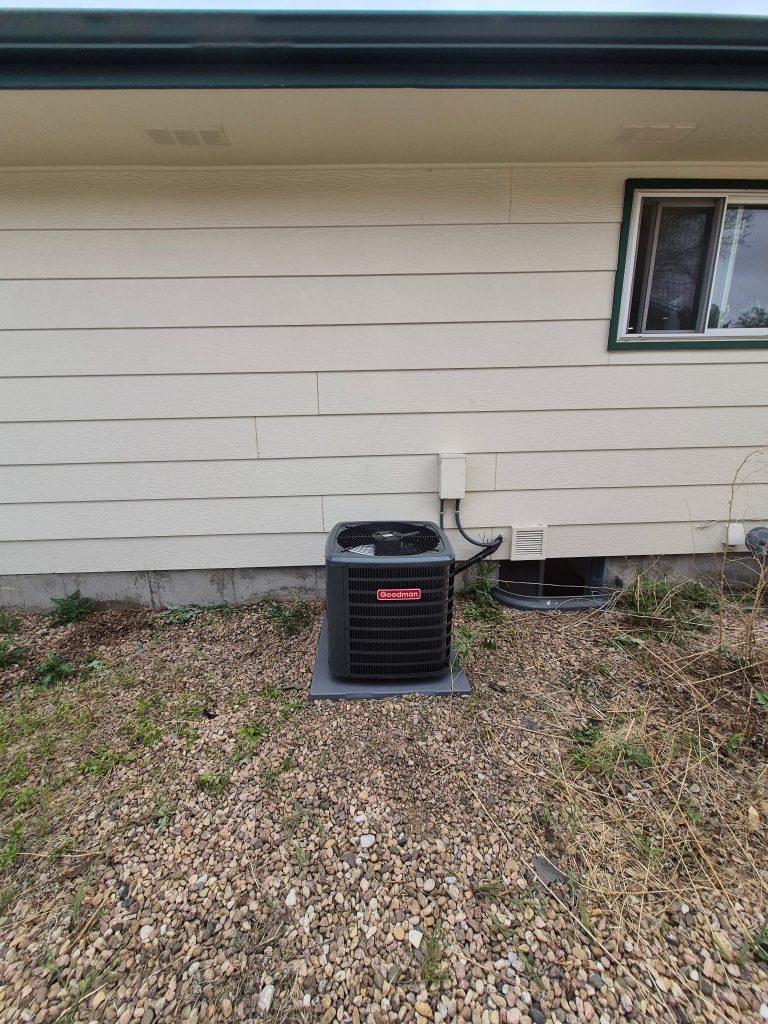
Household discomfort that appears to follow AC use can also justify an HVAC inspection, but UV is not a replacement for particle filtration or a medical treatment. McCormick first identifies the likely HVAC source and explains whether UV treatment, filtration, maintenance, or another response fits the findings.
Learn more about what a musty AC smell can mean in a Greeley home.
How McCormick Makes HVAC UV Light Installation Simple
HVAC UV light installation starts with an inspection of the cooling system and a clear explanation of the findings. McCormick follows the same three-step plan across its residential HVAC services:
- Call (720) 217-4801 or request service online. Tell us what you're seeing. No diagnosis needed.
- A NATE-certified McCormick technician arrives, tests the system, and shows you the findings before any work is approved.
- You approve the fix, we complete it, and you get the documentation your warranty requires.

How McCormick Installs an HVAC UV Light
HVAC UV light installation begins with an inspection of the evaporator coil, drain pan, air handler, and nearby duct configuration. When accessible, the technician can show the homeowner what was found before recommending UV equipment or another indoor air quality option.
The technician then determines whether coil-mounted or in-duct placement is appropriate. Coil-mounted installation is often preferred when the primary objective is to stop biological growth on the damp coil and pan. In-duct placement may be considered when the system configuration supports treatment of microorganisms moving through the air.
During installation, the technician:
- Selects a location that provides effective UV-C exposure
- Positions the lamp to illuminate the coil and drain pan when appropriate
- Protects materials that prolonged UV exposure could damage
- Mounts and wires the unit according to manufacturer requirements
- Installs a viewing port or external status indicator when included
- Tests the installed unit and confirms that the UV-C remains contained inside the HVAC cabinet
A UV lamp may operate continuously or with the HVAC blower, depending on the equipment design and manufacturer specifications. The technician tests the completed installation to verify that the lamp and its external indicator operate correctly.
The lamp should be inspected during annual air conditioning maintenance. UV output decreases with use, so an illuminated lamp may still require replacement after about one year.
What Does a UV Light Installation Visit From McCormick Include?
A McCormick UV light installation visit includes a documented system assessment, a clear explanation of whether UV-C fits the concern, operating and safety guidance, and a maintenance record showing when the lamp should be checked and replaced during future service.
The visit gives the homeowner a clear understanding of the recommendation and the UV light's role within the HVAC system. McCormick explains whether the original concern was consistent with biological growth or whether filtration, maintenance, or further investigation would be more appropriate.
Homeowners receive:
- An explanation of the inspection findings: The technician reviews the condition that led to the recommendation and explains why UV-C is or is not appropriate.
- A summary of the UV light's purpose: Homeowners learn which surfaces or moving air the lamp treats and why its location supports that purpose.
- Realistic performance expectations: The technician clarifies that UV-C prevents biological growth but does not capture dust, pollen, pet dander, or wildfire smoke.
- Operating and safety guidance: Homeowners learn how to use the external indicator without opening the cabinet or looking directly at the UV-C lamp.
- A maintenance schedule: The installation date and expected lamp-replacement interval are recorded for future service.
- Ongoing care recommendations: McCormick explains how lamp inspection can be coordinated with annual air conditioning maintenance.
How Long Does HVAC UV Light Installation Take?
HVAC UV light installation is generally completed during one service visit. The exact timing depends on equipment access, air-handler construction, the selected lamp configuration, suitable placement, and whether the technician identifies coil or drain-pan conditions that require separate attention before installation.
A straightforward coil-mounted installation may require fewer steps than an in-duct configuration that needs additional placement planning. The technician must ensure that the lamp reaches the intended surface while remaining enclosed within the HVAC cabinet.
Testing and homeowner guidance are part of the visit. Before leaving, the technician confirms lamp operation, explains the system indicator, and records the recommended inspection and replacement schedule.
UV Light vs. High-Efficiency Filtration - Which Does a Greeley Home Need?
HVAC UV lights treat biological growth on illuminated surfaces and reduce microbes exposed while passing the lamp. High-efficiency filtration captures airborne particles such as dust, pollen, pet dander, and smoke. Many Greeley homes benefit from one; some systems can support both approaches.
The right choice depends on the concern:
- Choose UV treatment when an inspection confirms biological growth on a damp evaporator coil or drain pan.
- Choose improved filtration when the main concerns are dust, pollen, pet dander, or Front Range wildfire smoke.
- Consider both when the HVAC system supports the filter's airflow requirements and the coil or pan also needs biological-growth control.
A UV light cannot collect particulate matter because it is not a filter. Likewise, a filter does not provide continuous UV-C exposure to damp HVAC surfaces. The two products perform separate functions and should not be presented as interchangeable air purifiers.
McCormick evaluates the existing filter rack, airflow, equipment condition, and indoor air concern before making a recommendation. Read more about high-efficiency filtration for Greeley homes.

Why Choose McCormick for UV Light Installation in Greeley?
McCormick provides HVAC UV light installation through NATE-certified technicians who also inspect and service air-conditioning systems. The company explains when UV-C fits the findings, when filtration is more appropriate, and how each recommendation relates to the existing HVAC equipment.
That distinction matters because not every Greeley home needs a UV light. Colorado's dry climate creates different conditions from persistently humid regions, but an operating air conditioner still produces condensation at the evaporator coil. McCormick bases its recommendation on the system's condition rather than making a blanket recommendation.
McCormick Heating & Cooling is based at 2881 S 31st Ave, Unit 3, in Greeley. McCormick is insured, and its technicians are EPA-certified. The company has also held BBB A+ Accreditation since 2015 and has received more than 800 Google reviews.
The same technician who services the AC can inspect the UV lamp, confirm the indicator, and replace the lamp when needed. This keeps UV maintenance connected to the equipment and surfaces the lamp is intended to treat.
HVAC UV Light Installation Across Northern Colorado
HVAC UV light installation is dispatched from McCormick's Greeley headquarters at 2881 S 31st Ave, Unit 3. McCormick provides residential UV-C installation and maintenance in Greeley and surrounding communities across Weld, Larimer, and Boulder counties.
The service area includes:
HVAC UV Light FAQs
People Also Ask
Stop the Musty Smell at Its HVAC Source
If a damp odor returns whenever the AC runs, masking it will not correct biological growth on a wet evaporator coil or drain pan. A McCormick technician can inspect the system, show you the findings, and explain whether coil-mounted UV-C fits the condition.
Get an HVAC UV light recommendation based on your Greeley home and cooling equipment, not a blanket sales pitch.