Greeley Air Conditioning Service During July Heat: What to Check Before Calling After-Hours Service
Greeley’s July afternoons routinely push into the mid-90s, and the dry, high-altitude sun beats down without much relief near the University of Northern Colorado campus or the open farmland east of town.
When an air conditioner quits during that kind of heat, waiting until Monday morning isn’t really an option for most families. That’s exactly why so many Weld County homeowners search for air conditioning service in Greeley, CO, the moment their thermostat stops responding.
Before you dial for after-hours help, a few quick checks can save you a service call altogether or at least tell your technician exactly what’s wrong before they even pull into the driveway.
This guide breaks down what to inspect first, which cooling failures count as true July emergencies, and which repairs should always stay in the hands of a licensed pro.
Why Greeley’s July Heat Pushes AC Units Harder Than Other Seasons
Greeley sits at roughly 4,663 feet above sea level, meaning thinner air gives condensers less natural help dumping heat than units running at lower elevations.
Pair that with dry, triple-digit-adjacent afternoons and blowing dust from surrounding farmland, and it’s easy to see why compressors and capacitors take a beating this time of year.
Homeowners who put off calling for air conditioning service in Greeley, CO until it’s “convenient” often end up paying for a bigger repair than if they’d caught the problem early.
If you’re still comparing contractors or choosing HVAC in Greeley for the first time, July heat is a rough teacher, but it’s also the fastest way to find out which company actually shows up when you need them.
Quick Checks Before You Call After-Hours Air Conditioning Service in Greeley, CO
Run through this list before assuming the worst:
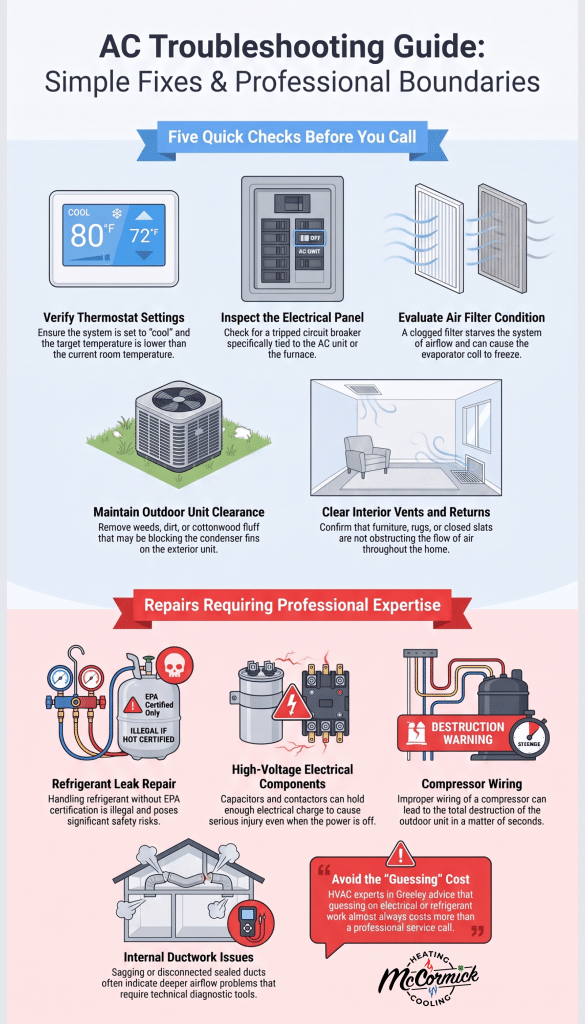
- Thermostat settings: confirm it’s set to “cool” and the target temperature is below the room temperature.
- Circuit breaker: check the electrical panel for a tripped breaker tied to the AC or furnace.
- Air filter: a clogged filter starves airflow and can freeze the evaporator coil.
- Outdoor unit clearance: clear weeds, cottonwood fluff, or dirt blocking the condenser fins.
- Vents and returns: make sure nothing is closed or blocked by furniture or rugs.
If everything checks out and the unit still won’t cool your home, it’s time to request professional AC repair services rather than keep guessing in 95-degree heat.
Repairs That Should Never Be DIY in Greeley Homes
Some AC problems are safe for a handy homeowner to tackle. Others aren’t:
- Refrigerant leaks: handling refrigerant without EPA certification is both illegal and dangerous.
- Electrical components: capacitors and contactors hold enough charge to seriously injure someone.
- Compressor wiring: a miswired compressor can destroy an entire outdoor unit in seconds.
- Sealed ductwork issues: sagging or disconnected ducts often hide bigger airflow problems.
This is where a trained tech earns their spot on your speed dial. Any reputable HVAC service team in Greeley will tell you the same thing: guessing on electrical or refrigerant work almost always costs more than calling for help the first time.
Weld County Dust, Hard Water, and Your Air Conditioner
Greeley’s agricultural surroundings mean more airborne dust and pollen settling on outdoor condenser coils than you’d find in a typical suburb.
That buildup restricts airflow and forces the system to run longer just to hit the same temperature.
Add in the dense cottonwood fluff that blankets the area every summer, quickly clogging outdoor condenser fins, and you have two very local reasons Greeley units struggle more than average.
Homeowners who search for AC repair Greeley in July are frequently dealing with one of these two issues without realizing it.
Routine coil cleaning and drain checks go a long way toward preventing an after-hours call in the first place.
If your last tune-up was more than a year ago, now’s the time to check McCormick’s current specials before scheduling and save on the visit.
What Happens When You Request After-Hours Help From McCormick
If your checklist doesn’t solve the problem and the house keeps climbing past 80 degrees, it’s time to request Emergency HVAC service.
McCormick’s technicians are NATE and EPA-certified, meaning they’re trained to handle refrigerant, electrical, and compressor issues and perform safe repairs that homeowners shouldn’t attempt alone.
You can see why Greeley residents keep coming back by checking McCormick’s reviews on its Google Business Profile before you call.
Key Takeaways
- Greeley’s elevation and dry heat make AC units work harder in July than in most other climates.
- Always check the thermostat, breaker, filter, and outdoor unit clearance before calling for service.
- Refrigerant, electrical, and compressor repairs should always go to a licensed technician.
- Weld County dust and hard water are common local causes of reduced cooling efficiency.
- Routine maintenance now can prevent an expensive after-hours call later in the summer.
Don’t Let July Heat Decide Your AC’s Fate
A few minutes of checking simple things the thermostat, the breaker, the filter can mean the difference between a five-minute fix and a stressful after-hours wait in the Greeley heat.
When the problem is bigger than that, don’t risk your safety or your system by trying to handle refrigerant or electrical repairs yourself.
Ready to get it fixed the right way? Contact McCormick Heating & Cooling today and let a certified local technician take it from here.

Frequently Asked Questions
What should homeowners check before calling after-hours AC service?
Homeowners should check the thermostat setting, circuit breaker, air filter, and outdoor unit clearance first. These simple checks resolve many “no cooling” complaints without needing a technician visit at all.
When is no cooling urgent during July heat?
No cooling becomes urgent when indoor temperatures climb past 85 degrees, especially with elderly residents, infants, or pets present. In Greeley’s dry July heat, extended exposure raises real heat-illness risk within hours.
What should not be DIY repaired?
Refrigerant handling, electrical component repairs, and compressor wiring should never be DIY repaired. These require EPA certification and specialized tools, and mistakes can cause injury or destroy the entire AC unit.