
5-Star Reviews
Years of Local Service
Accredited Business
Technicians
and Operated
The condenser is the outdoor half of a central AC system, containing the compressor, coil and fan. It can be replaced alone when the indoor coil is a compatible AHRI match, and McCormick explains when it is and is not.
McCormick Heating & Cooling evaluates condenser failures and hail damage for Greeley homeowners. Explore McCormick's complete air conditioning services when you need support beyond the outdoor unit.
What Does the AC Condenser Do - and When Can It Be Replaced on Its Own?
AC condenser replacement can be completed without changing the indoor coil only when both components use compatible refrigerant and form an AHRI-matched system. The condenser contains the compressor, outdoor coil and fan that release heat collected inside the home outdoors.
The compressor moves refrigerant through the cooling circuit. The condenser coil releases the heat that the refrigerant absorbed inside the house, while the fan draws outdoor air across the coil to carry that heat away.
Although these parts sit in one outdoor cabinet, the condenser does not operate independently. It works with the indoor coil, furnace blower, line set and controls as one cooling system.
The Air-Conditioning, Heating, and Refrigeration Institute, or AHRI, verifies equipment combinations under standardized testing conditions. An AHRI match confirms that the condenser and indoor coil were designed and rated to operate together.
A condenser-only change may not be appropriate when the indoor coil is too old, uses incompatible refrigerant, or cannot be paired with an available outdoor unit. Installing mismatched components can reduce capacity, interfere with refrigerant control, and jeopardize manufacturer warranty coverage.
Refrigerant compatibility has become especially important as new equipment moves to current-generation refrigerants. McCormick's overview of the R-410A transition and its equipment implications provides additional context. Your technician confirms compatibility before recommending a condenser-only installation.
What Are the Signs a Greeley Condenser Needs Replacing?
AC condenser replacement may be needed when the compressor fails, the fan seizes, refrigerant repeatedly leaks from the outdoor coil, or hail damage restricts airflow. A technician must test the unit before deciding whether replacement is the appropriate service response.
Warning signs can include:
- The outdoor unit hums but does not start. This can indicate a failed compressor, seized fan or another component problem. Some failures may be repairable, so testing should come before a replacement recommendation.
- The compressor has failed on a unit more than 12 years old. The outdoor unit's age and its compatibility with the indoor coil help determine whether condenser-only replacement remains practical.
- The condenser fan has stopped. A stationary fan prevents the outdoor coil from releasing heat properly and can cause the system to shut down or overheat.
- The outdoor coil has repeated refrigerant leaks. Multiple leaks or significant coil deterioration may make continued repair unreliable.
- Hail has flattened large sections of coil fins. Restricted fins reduce airflow through the coil, limiting heat rejection and forcing the compressor to work harder.
- The coil has been punctured. A puncture can release refrigerant and may require more than cosmetic fin correction.
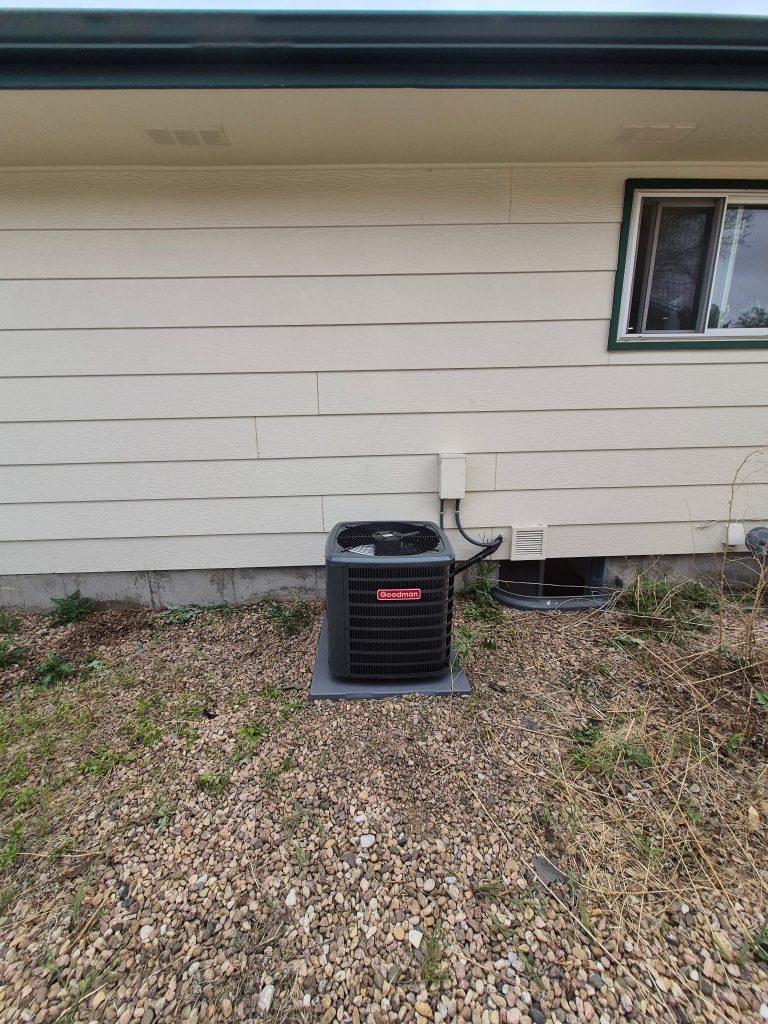
Not every dented panel or bent fin means the condenser must be replaced. Light fin damage may be cosmetic, while more extensive bending can block airflow. A punctured coil or damaged refrigerant circuit is a functional problem that requires closer evaluation.
Northern Colorado's typical May-through-August hail season can leave an outdoor unit damaged even when the house has no obvious cooling problem yet. McCormick assesses the cabinet, coil, fins, fan and refrigerant circuit to distinguish surface damage from conditions affecting operation.
Homeowners who need information about documentation and next steps can read McCormick's guide to Colorado hail damage and AC claims.
A failed condenser during Greeley's July heat can leave the house without cooling when wildfire smoke makes opening windows impractical. Continuing to run a condenser with severely restricted fins can also increase operating pressure and shorten compressor life.
How Condenser Service Works With McCormick
AC condenser service follows three clear customer steps, beginning with a description of what the outdoor unit is doing. Homeowners do not need to identify the failed component or determine whether the condenser can be replaced separately before scheduling service.
- Call (720) 217-4801 or request service online. Tell us what you're seeing. No diagnosis needed.
- A NATE-certified McCormick technician arrives, tests the system, and shows you the findings before any work is approved.
- You approve the fix, we complete it, and you get the documentation your warranty requires.

What Happens During Condenser Installation?
AC condenser installation begins after McCormick has assessed the system, confirmed that condenser-only replacement is appropriate, and identified an AHRI-matched unit. The installation then focuses on removing the failed equipment, preparing the site and commissioning the replacement.
- Verify the approved equipment match. Before removing equipment, the technician verifies the indoor coil model, refrigerant compatibility and AHRI match for the replacement condenser.
- Recover the existing refrigerant. An EPA-certified technician recovers the refrigerant using approved procedures before disconnecting and removing the old outdoor unit.
- Prepare the condenser location. The technician checks that the pad is firm and level, correcting or replacing it when necessary. The new unit is positioned above the surrounding grade and expected snow line with the manufacturer-required airflow and service clearances.
- Prepare the refrigerant line set. The existing line set is flushed when suitable for continued use or replaced when its condition, dimensions or refrigerant compatibility require it.
- Install the replacement condenser. The new outdoor unit is secured on the pad and connected to the refrigerant lines, system controls and coordinated disconnect.
- Evacuate and charge the system. The refrigerant circuit is evacuated to the required specification to remove air and moisture. The specified refrigerant charge is then weighed in and adjusted according to the equipment requirements.
- Commission the completed system. McCormick starts the equipment and records superheat or subcooling, static pressure, and the supply-to-return temperature split. The technician also verifies compressor, condenser-fan and thermostat operation.
- Provide the installation records. The homeowner receives the commissioning readings and relevant equipment documentation for their records and applicable warranty requirements.
What Does a Condenser Assessment From McCormick Include?
An AC condenser assessment identifies the failure, documents hail damage, and determines whether repair, condenser-only replacement or full-system replacement is appropriate. McCormick tests the outdoor unit, identifies the indoor equipment and explains the findings before you approve any proposed work.
The assessment answers three questions:
- What failed? McCormick tests the compressor and fan, examines the coil and refrigerant circuit, and determines whether the problem is isolated or extensive.
- Did hail cause functional damage? The technician distinguishes cabinet dents and light fin damage from restricted airflow, damaged refrigerant tubes or a punctured coil.
- Can the condenser be replaced alone? McCormick identifies the indoor coil and refrigerant, reviews the equipment's age and condition, and checks whether a compatible AHRI-matched condenser is available.
After the assessment, McCormick explains which route fits the findings:
- A serviceable component may qualify for air conditioning repair.
- An isolated outdoor-unit failure may allow condenser-only replacement.
- Incompatible or deteriorated indoor equipment may make full AC replacement the appropriate option.
How Long Does Condenser Replacement Take?
Condenser replacement usually takes one day after compatibility is confirmed and the correct equipment is available. The timeline includes refrigerant recovery, unit placement, line-set preparation, evacuation, charging, startup, and commissioning before the system returns to service.
The installation may be completed toward the shorter end of that range when the pad, line set, controls and indoor coil are compatible and readily accessible. Additional preparation may be needed when the existing pad is not level, the line set requires replacement or access is restricted.
Condenser-Only Replacement vs. Full System Replacement - Which Is Right?
Condenser-only replacement is appropriate when the indoor coil, refrigerant and outdoor unit form a compatible AHRI-matched system. Full system replacement is the better route when those components cannot be matched or when age and condition make a partial change unreliable.
A condenser-only project may be suitable when:
- The outdoor unit has suffered isolated damage
- The indoor coil remains in suitable condition
- Compatible equipment is available
- The refrigerant requirements match
- An AHRI-rated equipment combination can be documented
- The furnace blower can support the new condenser and coil combination
Changing the complete system may be more appropriate when:
- The indoor coil cannot be matched to an available condenser
- The indoor and outdoor components require different refrigerants
- The indoor coil has significant corrosion or repeated leaks
- The existing components are substantially different in age
- The blower cannot provide the required airflow
- A partial change would compromise performance or warranty coverage
McCormick will not recommend condenser-only work when the proposed components cannot operate as a proper matched system. Review the company's AC replacement guidance when both the indoor and outdoor equipment may need to change.
Homeowners adding cooling to a furnace-only home need a different service because there is no existing matched cooling system. Learn what that project involves on McCormick's air conditioning installation page.

Why Choose McCormick for Condenser Installation in Greeley?
McCormick provides condenser installation in Greeley with compatibility checks, EPA Section 608 refrigerant handling, and documented commissioning. Its NATE-certified technicians also explain when condenser-only replacement is unsuitable instead of installing a unit that cannot perform as a matched system.
Homeowners choose McCormick for:
- More than 800 Google reviews
- BBB A+ Accreditation since 2015
- A local Greeley headquarters
- AHRI equipment-matching checks
- Proper refrigerant recovery procedures
- Recorded commissioning measurements
- Straightforward recommendations about condenser compatibility
- Weekday after-hours and weekend morning availability
Where Does McCormick Provide Condenser Installation?
AC condenser installation is available from McCormick's Greeley headquarters for residential properties throughout nearby Weld, Larimer and Boulder County communities. Technicians dispatch from 2881 S 31st Ave, Unit 3, in Greeley to assess damaged and failed outdoor units.
The service area includes:
AC Condenser FAQs
People Also Ask
Outdoor Unit Humming but Not Cooling?
If the outdoor unit hums without starting or hail has flattened the coil fins, McCormick can determine whether the problem is repairable and whether condenser-only replacement is compatible with your existing indoor equipment.
You receive a clear explanation of the findings, the proposed equipment match, and the commissioning measurements completed after installation.