5-Star Reviews
Years of Local Service
Accredited Business
Technicians
and Operated
How Fast Can McCormick Reach You?
McCormick technicians are dispatched from Greeley, so help is never coming from across the state.
Emergency heating repair near you starts in Greeley, not in a call center three states away. Our trucks leave from our shop at 2881 S 31st Ave #3. That's real miles from your house, and our team knows every one of them.
The big national companies take your call, then look for someone to send. We skip that step. The person who answers your call works with the person who drives to your door.
What Happens When You Call?
Emergency heating service from McCormick takes only three steps:


Step 2
We triage on the phone — we ask what the furnace is doing, what you smell, and what the thermostat reads, then tell you whether to shut the system down before we arrive.

Step 3
A NATE-certified technician is dispatched and restores heat, or makes the system safe, on that visit.
The technician is moving while you're still on the line. The clock starts at "hello," not at the knock on the door. No forms, no account, no phone tree at midnight with cold hands.
Prefer to start in writing? Book an emergency service request. But when the house is losing heat, the phone is faster.
What Are the Signs You Need Furnace Repair?
A furnace emergency is any of six situations: total heat loss in freezing weather, a carbon monoxide alarm, a gas smell, a furnace that runs while the house keeps getting colder, visible fire damage at the unit, and a system stuck in lockout. If tonight matches one, call now rather than waiting for morning:

Sign #1
No heat at all in freezing weather. The clearest emergency there is. Once the indoor temperature falls far enough, your water supply lines are at risk too.

Sign #2
A carbon monoxide alarm. Leave the house first, call from outside. Never wait-and-see. More on this below.

Sign #3
A gas smell near the furnace. Same rule: out first, call from outside. Don't flip switches or stay inside to open windows.

Sign #4
The furnace runs but the house keeps getting colder. Something between the burner and your rooms has failed. Running it harder won't fix it.

Sign #5
Scorching, soot, or a burning-plastic smell at the unit. Shut the system down and call. A brief dusty smell at the first heat of the season is normal; melting plastic is not.

Sign #6
A lockout that won't reset. The furnace is protecting itself from a fault. Resetting it again doesn't fix the fault.
If your situation isn't on this list, perhaps the furnace is short-cycling, making a new noise, or heating unevenly, a standard furnace repair appointment is the right call. Same technicians, same standard of work, no midnight wake-up.
Still genuinely unsure? Call anyway. Sorting that out is what our phone triage is for.
Is a Carbon Monoxide Alarm a Furnace Emergency?
Yes. A carbon monoxide alarm is a furnace emergency until a technician confirms otherwise. Get everyone out of the house first, then call from outside.
Carbon monoxide is colorless and odorless. The alarm is the only warning you get, and your heating system is one of the most common residential sources. A cracked heat exchanger or blocked vent can push combustion gases into your living space while the furnace sounds normal and keeps making heat.
This is not something a reset button resolves, or fresh detector batteries make safe, or something to sleep on with the windows cracked.
A McCormick technician will test the system, find the source, and won't hand the furnace back until it's safe to run. If it can't be made safe that night, we shut it down and tell you exactly what happens next. A cold house is recoverable; the alternative is not.
If anyone in the home feels dizzy, nauseated, or confused, call 911 first. Call us once everyone is safe.

What Should You Do Before the Technician Arrives?
Before your emergency furnace repair visit, check three things: the thermostat is set to Heat and above room temperature, the furnace's power switch is on, and the breaker hasn't tripped.
That furnace switch looks exactly like a light switch, sits near the unit, and gets bumped off more often than anyone admits. If either check brings the heat back, cancel the visit with a clear conscience. If not, you've saved the technician diagnostic time.
Then slow the heat loss:
Keep exterior doors closed and limit trips in and out.
Close off unused rooms so warmth stays where the people are.
Open cabinet doors under sinks on exterior walls so room air reaches the supply lines.
Space heaters: hard level surface, three feet from anything flammable, plugged straight into the wall, never an extension cord.
Two things not to do. Don't keep resetting a locked-out furnace to squeeze out another cycle (that's how a fixable problem becomes a serious one). And don't run a gas oven with the door open for heat; it was never designed for that.
If your emergency is a gas smell or a CO alarm, be outside when you call.
How to Get Emergency Heating Service — Three Steps
Emergency heating service from McCormick takes only three steps:
Step 2
We triage on the phone — we ask what the furnace is doing, what you smell, and what the thermostat reads, then tell you whether to shut the system down before we arrive.
Step 3
A NATE-certified technician is dispatched and restores heat, or makes the system safe, on that visit.
That's the whole process. No forms to print, no account to create, no phone tree to navigate at midnight with cold hands.
Why Choose McCormick for Emergency Furnace Repair in Greeley?
Emergency furnace repair in Greeley is what McCormick Heating & Cooling was built around: residential heating, done by people who live where you do and answer when you call.
Owner Jesse Trout, Colorado native and HVAC expert, runs a team of NATE & EPA Certified technicians backed by 800+ reviews on Google. Every job carries our Satisfaction Guaranteed commitment, and that guarantee doesn't pause after dark.
The certifications matter most on an emergency call. NATE is the heating trade's independent, exam-verified standard. The person diagnosing your furnace at midnight has proven they know how it works, not just how to swap parts. EPA certification governs safe refrigerant handling across our HVAC work.
We service every major furnace brand, and as an Armstrong Air dealer we know current residential equipment from the inside out. We're also residential on purpose: no commercial division, no side businesses. The technician at your door has spent their career on systems like yours, in this exact climate.


Where McCormick Answers Emergency Heating Calls
Emergency heating service from McCormick covers Northern Colorado from our home base in Greeley, with technicians answering no-heat calls in Loveland, Longmont, and Fort Collins.
Cooling emergency instead? Our emergency HVAC service page covers air conditioning failures the same way this page covers heat. For everything your furnace needs when it isn't an emergency, start with our heating services hub.
Get Your Heat Back Tonight — Call (720) 217-4801
One call is the entire process. Say "no heat," give us your address, and a NATE-certified McCormick technician takes it from there. Dispatched tonight, not added to tomorrow's schedule. You don't need to diagnose anything or decide whether it's "bad enough." If your home has no heat, it qualifies. Call now.
McCormick Heating & Cooling · 2881 S 31st Ave #3, Greeley, CO 80631, United States · Mon–Fri 8am–5pm

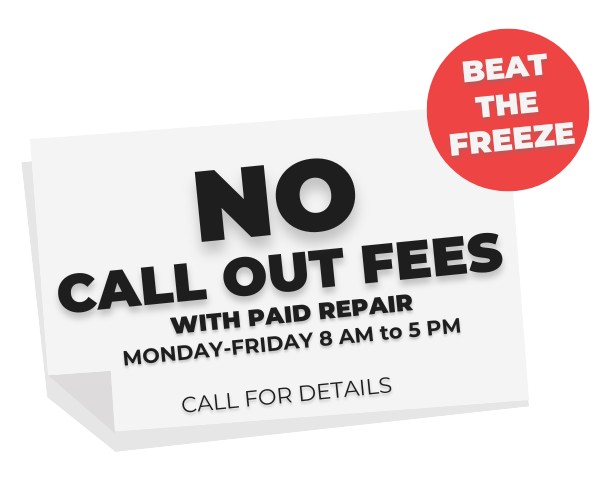
LIMITED TIME DEALS
HVAC SPECIALS
SEASONAL PROMOS